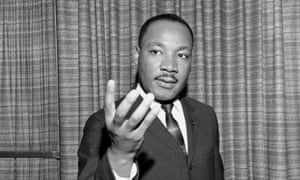
Gary Younge on how the political messages of radical heroes of the
past, people like Martin Luther King, have been either neutered or
co-opted by later elites to strip them of their power to effect
continuing change. Younge even illustrates his point by slipping in a
damning quote from his own paper, the Guardian, about the suffragette
movement:
'In 1905, when Christabel Pankhurst and Annie Kenney
were forcibly removed from a Liberal party meeting for heckling in
favour of female suffrage, the Guardian
condemned their behaviour as being “such as one was accustomed to
attribute to women from the slums”.'
Other highlights from the piece:
'Before radical history can be embraced by the establishment it must be
washed clean of whatever ideology made it effective. Radical change is
most likely to come from below, be fiercely resisted by entrenched
interests from above and achieved through confrontation. “If those who
have do not give, those who haven’t must take,” argued the late
anti-racist intellectual Ambalavaner Sivanandan. This is not a message
those in power are keen to promote, lest their own interests be
challenged. ...
'History does not stop because someone puts up a
plaque. If we understand that what was radical yesterday could be
accepted as common sense tomorrow, that might change how we act today.
Knowing that some of our most cherished rights were won by often
uncelebrated people facing great odds, unrelenting vilification and, at
times, state repression, suggests that at least some of those being
denigrated today will be celebrated one day. The means by which we might
achieve progressive change may shift according to the context – but the
need for it never goes away.'
‘In another part of the sermon Ram Trucks used, King literally tells the
congregation not to be fooled into spending more money than necessary
on cars by sharp advertisers.’
Photograph: Anonymous/AP